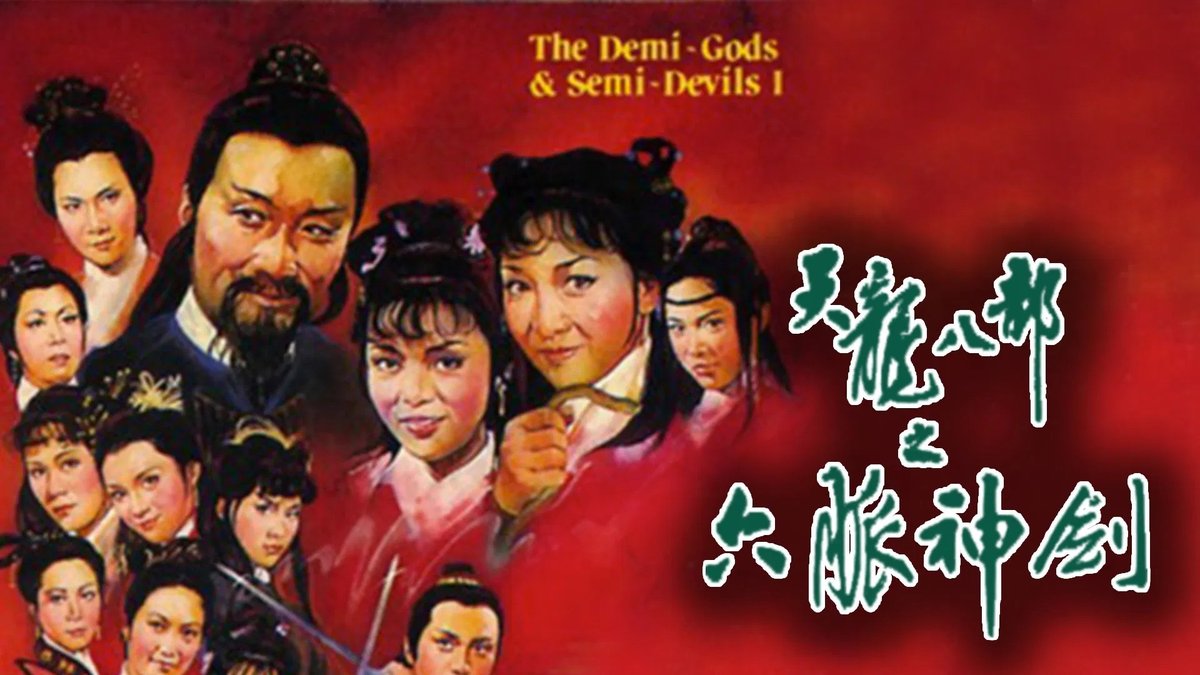
天龍八部 Unpacks Jin Yong's Classic Wuxia Themes of Fate and Karma
Step into a world where destiny is a tangled web, martial arts defy imagination, and the human heart battles against its deepest desires. Jin Yong's magnum opus, Tian Long Ba Bu (天龍八部), often translated as Demi-Gods and Semi-Devils, is far more than a wuxia novel; it's a sweeping philosophical epic that delves into the profound themes of fate, karma, love, hatred, and the intricate dance of human suffering. Named after the "Eight Classes of Non-Human Entities" in Buddhist sutras, this masterpiece frames the vast, suffering world of mortals beneath the infinite reach of Buddhist law, asking fundamental questions about our place within it.
Set against the tumultuous backdrop of the Northern Song Dynasty (around 1094 AD), Tian Long Ba Bu intricately weaves together the destinies of diverse kingdoms—Song, Liao, Dali, Western Xia, and Tubo—through a grand narrative of martial arts rivalries and ethnic conflicts. First serialized in 1963, its final, revised edition in 2005 cemented its status as one of Jin Yong's most ambitious and thought-provoking works, a story so rich and complex it's often hailed as the pinnacle of his literary achievements.
The Intertwined Fates of Three Heroes
At its heart, the saga follows three distinct protagonists, each embodying different facets of humanity's struggle against destiny. Their paths, though vastly different, are fated to cross, creating a tapestry of interwoven tragedies and triumphs.
There’s Duan Yu, the reluctant prince of Dali, who shuns martial arts yet, through sheer serendipity, masters unparalleled techniques like the Northern Profound Art and Six Meridian Divine Sword. His journey is one of romantic entanglement and self-discovery, eventually leading him to the throne. Then we have Qiao Feng (later Xiao Feng), the peerless leader of the Beggar Clan, whose life unravels when he's exposed as a Khitan. His quest for truth is a tragic odyssey of loyalty, betrayal, and immense personal sacrifice. Finally, there's Xuzhu, the unassuming Shaolin monk, who stumbles into the legacy of the enigmatic Carefree Sect and finds himself burdened with immense power and unforeseen responsibilities, ultimately discovering a surprising heritage and finding love in the most unexpected places. Their unique journeys, emotional struggles, and martial prowess are explored in much greater depth, and we highly recommend you dive into our dedicated guide on Main Characters & Their Arcs.
A Tapestry of Intricate Plots and Legendary Martial Arts
Tian Long Ba Bu is celebrated for its extraordinary plot complexity, featuring a multitude of characters and extensive historical settings that span vast geographical and cultural landscapes. The narrative unfolds through a series of dramatic events, from the epic Battle of Juxian Manor where Qiao Feng faces the martial world alone, to Duan Yu's perilous encounters and Xuzhu's accidental ascendance. The novel is a masterclass in storytelling, presenting a world where every action has far-reaching consequences and personal vendettas often ignite national conflicts. To truly grasp the breadth of this intricate tale, you’ll want to Explore the full story summary. Understand how each character's journey contributes to the grand design.
Beyond the gripping narrative, Jin Yong's creativity shines through the depiction of martial arts. The skills showcased here are not merely tools for combat but reflections of the characters' personalities and philosophical leanings. From Duan Yu’s elegant凌波微步 (Lingbo Weibu) and the formidable六脈神劍 (Six Meridian Divine Sword) to Qiao Feng’s powerful降龍十八掌 (Eighteen Dragon Subduing Palms) and the diverse internal energy techniques of the Carefree Sect, the martial arts are as varied and fantastical as the characters themselves. For a deeper dive into these awe-inspiring combat forms and the lore behind them, Learn martial arts styles and techniques that define this legendary wuxia world.
Beyond Wuxia: Philosophical Depths and Profound Questions
What truly elevates Tian Long Ba Bu is its profound philosophical undercurrent, heavily influenced by Buddhist thought. Jin Yong himself noted that the novel aimed to express aspects of Buddhist philosophy, particularly the idea that "life is suffering, and ultimately, it is better to die." The very title, drawn from Buddhist cosmology, suggests that all beings, regardless of their form, are caught in the endless cycle of existence.
The central thesis, "無人不冤,有情皆孽" (no one is wronged, everyone is entangled in karma), resonates throughout the story. It explores humanity's tragic susceptibility to "greed, hatred, and delusion" (貪、嗔、痴) – the three poisons in Buddhism. These poisons fuel the characters' desires for power, their burning need for revenge, and their consuming passions, leading to inevitable suffering and a sense of Oedipal fate for the three protagonists. As literary critic Chen Pingyuan notes, the book’s world, fraught with dark forces, is ultimately overshadowed by Buddhist transcendence, evoking the pity and fear of Greek tragedy. Jin Yong, through Xiao Feng’s profound questioning of ethnic conflict, even transcends narrow nationalism, advocating for peace and inter-ethnic harmony. To fully appreciate these rich layers of meaning, Explore Philosophical & Buddhist Themes that shape this epic narrative.
Enduring Legacy: From Page to Screen and Beyond
Tian Long Ba Bu has left an indelible mark on Chinese literature and popular culture. Its complex characters, grand battles, and profound themes have garnered immense critical acclaim, with scholars like Kong Qingdong even likening it to "China's War and Peace" and "China's Crime and Punishment." The novel's impact is so significant that a passage from its forty-first chapter, "Eighteen Flying Riders of Yan Yun, Galloping Like Tigers Amidst Smoke and Wind," was included in Chinese high school language textbooks in 2005.
Its enduring popularity has led to numerous adaptations across various media, bringing its epic tale to new generations. From highly successful television series and films to comics and video games, each adaptation offers a unique interpretation of Jin Yong's vision. These different versions often highlight specific aspects of the story, be it the tragic romances, the awe-inspiring martial arts, or the profound philosophical dilemmas. Discover how this literary masterpiece has been brought to life through various creative lenses by checking out our guide on Adaptations Across Media.
The Unforgettable Echoes of 天龍八部
From Duan Yu’s unexpected path to imperial power, to Xiao Feng’s heartbreaking self-sacrifice at Yanmen Pass to prevent war, and A'Zi’s ultimate, tragic leap into the abyss clutching Xiao Feng’s body, Tian Long Ba Bu crafts a conclusion as poignant and unforgettable as its journey. Even the revised ending, where Wang Yuyan returns to care for a deranged Murong Fu, underscores the novel's pervasive sense of fleeting dreams and the bittersweet nature of life. Tian Long Ba Bu remains a powerful, moving exploration of the human condition, a testament to Jin Yong's unparalleled genius, and an essential read for anyone seeking a story that truly resonates with the universal struggles of fate, karma, and the search for meaning in a chaotic world.