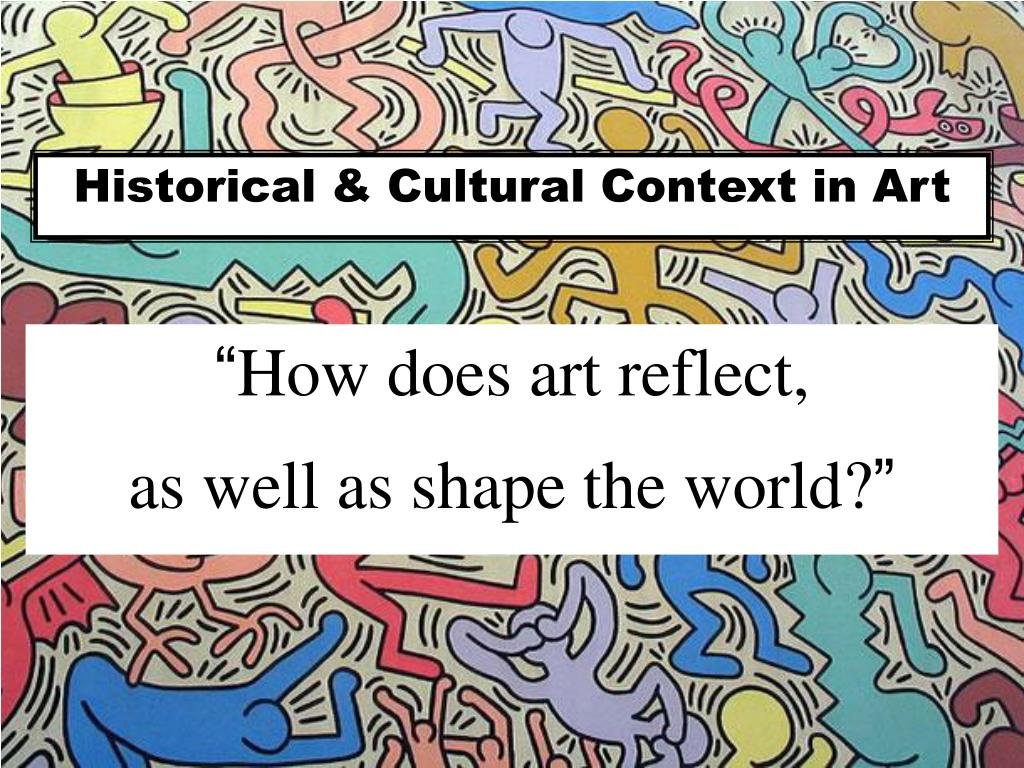
Every story, every event, every artifact we encounter from the past arrives with invisible threads attached—threads woven from the very fabric of its time and place. This is the essence of Historical & Cultural Context: the profound yet often overlooked circumstances that shape how we understand anything that ever was. Without recognizing these powerful forces, we risk misunderstanding, misinterpreting, and ultimately, misrepresenting the past itself. It’s like trying to appreciate a masterpiece in a dark room; you can see the outlines, but you miss the colors, the brushstrokes, the very soul of the art.
As a journalist, I’ve learned that the "what happened" is only half the story. The "why it happened," "how people reacted," and "what it truly meant"—these deeper layers are only accessible through a rigorous embrace of context. It's the difference between merely recounting facts and truly comprehending humanity's intricate journey.
At a Glance: Why Context Is Everything
- It’s a powerful lens: Context helps you see the past through the eyes of those who lived it, revealing their motivations, beliefs, and constraints.
- It prevents distortion: Without context, you risk projecting modern values onto historical events, leading to skewed interpretations and judgments.
- It enriches understanding: From literature to ancient ruins, context unlocks deeper meanings, symbolism, and societal critiques.
- It connects us: Understanding historical and cultural nuances fosters empathy for past struggles and triumphs, bridging the gap between then and now.
- It’s an active skill: Engaging with context isn't passive; it requires critical thinking, questioning, and a willingness to challenge assumptions.
The Unseen Threads: What Is Historical Context?
At its core, historical context refers to the specific social, political, cultural, and economic conditions that existed during a particular period or at the time an event occurred. Think of it as the complete ecosystem surrounding a moment in time. Understanding this ecosystem is not merely academic; it’s essential for grasping the true meaning of anything from a presidential speech to a classic novel.
When you delve into historical context, you're not just learning dates and names. You're exploring the prevailing ideologies, the power structures, the daily lives of ordinary people, and the grand movements that defined an era. This background is what gives life and relevance to historical events, texts, and figures.
Why It Matters: Unpacking Authorial Intent and Deeper Meanings
For those who engage with literature, art, or even everyday historical documents, historical context is your most valuable tool. It offers crucial insights into an author's or creator’s motivations and perspectives, shedding light on the themes, issues, and stylistic choices embedded in their work.
Consider a novel from the Victorian era. Without understanding the strict social hierarchies, the burgeoning industrial revolution, or the rigid moral codes of the time, you might miss the subtle critiques of class, the anxieties about progress, or the subversive nature of a character’s defiance. Historical context reveals how literature often responds to, or even actively critiques, societal norms and events, directly influencing character development and plot structures.
The Peril of Oversight: When Context Is Ignored
Neglecting historical context is akin to judging a historical figure's actions by today's standards without acknowledging the limited information, cultural norms, or available technologies of their time. It’s a common pitfall known as presentism, and it almost always leads to misunderstandings about authorial intent, a text's true significance, or the nuances of past decisions.
When you strip away context, complex narratives become oversimplified. You might miss critical social commentary or fail to appreciate the profound impact of cultural norms on characters' choices. The result? A skewed, flattened understanding of history that makes the past seem less human, less relatable, and far less instructive. You could, for instance, entirely misinterpret the symbolic meaning of a certain garment or gesture in a historical painting if you don't grasp the social codes of that specific period.
Connecting Eras: How History Shapes Reader Empathy
Approaching texts with an awareness of how past events and societal norms shaped decisions and thematic elements isn't just about intellectual rigor; it's about fostering empathy. By comparing contemporary values with historical ones, you develop a more nuanced perspective on human behavior and experience. You begin to understand why characters made the choices they did, why societies grappled with particular dilemmas, and how these experiences resonate with our own. This critical thinking and empathy allow you to appreciate a work's contemporary relevance and its lasting resonance, transforming a mere story into a powerful bridge across time. Explore Tian Long Ba Bu and you'll quickly see how deeply character motivations are rooted in the specific historical and cultural setting of the Wuxia world.
Beyond the Pages: The Rich Tapestry of Cultural Context in History
If historical context provides the framework of time, cultural context fills it with texture, color, and depth. Cultural context is the interwoven fabric of social, political, and economic threads of a specific time and place, acting as the very lens through which historians interpret the past. It offers invaluable insight into the motivations, beliefs, values, and practices of individuals and societies, guiding their every action and decision.
This isn't just about art or tradition; it's about how people thought, what they believed was right or wrong, how they organized their families, what constituted power, and how they perceived the world around them.
Culture as a Catalyst: Shaping Events and Interpretations
Cultural norms and values are not static backdrops; they are active shapers of history. They guide the actions and decisions of historical figures, influencing everything from diplomacy to warfare. Moreover, they dictate how historical events are perceived and recorded by contemporaries, profoundly influencing the primary sources we rely on today. Even historians bring their own cultural context to their analysis, making constant self-reflection a crucial part of the craft.
Mini-Case: The French Revolution
The French Revolution wasn't just a political uprising; it was deeply rooted in 18th-century French cultural context. Enlightenment ideas, emphasizing reason, individual rights, and anti-authoritarianism, collided with deep financial crisis and simmering social unrest caused by rigid class structures and the absolute monarchy. The cultural shift from unquestioning loyalty to critical inquiry fueled the revolutionary fervor.
Mini-Case: The U.S. Civil Rights Movement
Decades of racial segregation and discrimination provided the stark historical context for the U.S. Civil Rights Movement. But its cultural context was equally vital: leaders like Martin Luther King Jr. drew deeply upon African American Christianity for moral authority and community organization, while principles of nonviolent resistance (influenced by figures like Mahatma Gandhi) became a core cultural tenet, shaping tactics and public appeal.
Global Flashpoints: Where Culture Defined Conflict
Many pivotal moments in history are unintelligible without their specific cultural frameworks:
- The Crusades: These medieval wars were driven by complex religious fervor and geopolitical ambition, understood only through the distinct cultural lenses of medieval Christianity (pilgrimages, holy war theology) and Islam (defense of sacred lands, concept of jihad).
- The Opium Wars: The clash between 19th-century China and European powers like Britain was more than just a trade dispute. It represented a profound cultural collision between China's traditional Confucian values of order and self-sufficiency, and Europe's expansionist industrial capitalism and imperialistic worldview.
- The Arab Spring: This series of uprisings in the contemporary Middle East was shaped by local societal norms, political grievances, and the role of social media as a new cultural tool, all within the intricate framework of diverse Islamic values and regional identities.
Crafting the Past: How Culture Influences Historical Narratives
Historical narratives are not discovered; they are constructed. Cultural context plays a monumental role in this construction, influencing everything from the selection of historical facts to the emphasis placed on different aspects of the past. It shapes the interpretive frameworks historians use and the very narrative structures they choose to tell their stories.
The Challenge of Perspective: Varied Interpretations
Because cultural contexts vary across time and geography, so too do historical interpretations. Consider colonialism: a colonial power's historical narrative might focus on "civilizing missions" and economic benefits, while a postcolonial perspective will emphasize exploitation, cultural destruction, and resistance. Both are "true" in some sense, but filtered through vastly different cultural lenses. Recognizing these varied interpretations enriches our understanding, even if it presents challenges in reconciling disparate views.
Reconstructing Worlds: Navigating Bias and Distance
Reconstructing cultural context is a challenging endeavor. It involves navigating fragmentary and often biased historical sources, which themselves are products of their own cultural milieux. We must strive to understand cultural practices and values that can be vastly distant from our own, constantly guarding against the pitfall of projecting modern assumptions onto the past. This requires rigorous linguistic and cultural competence, critical analysis of sources, and a nuanced understanding of historical empathy. It’s an ongoing process of intellectual humility and relentless inquiry.
Preserving the Echoes: Cultural Context in Historical Heritage
Cultural context is not just for understanding abstract historical narratives; it's vital for tangible heritage—the sites, artifacts, and traditions that physically connect us to the past. Its significance in preservation and interpretation cannot be overstated.
More Than Stones: Why Context Guides Preservation
When we preserve a historical site or artifact, we're not just saving a physical object; we're protecting its meaning. Cultural context informs every aspect of this work, from the conservation and restoration methods chosen (e.g., using historically accurate materials) to how heritage is interpreted and presented to the public. It influences the very cultural significance and value attributed to a historical piece, determining why it matters and what story it tells. Without understanding this context, a ruin is just rubble, and an artifact is merely an old object.
Unlocking Ancient Stories: Iconic Heritage Sites
Many of the world's most iconic heritage sites owe their profound impact to a deep understanding of their cultural context.
- The Taj Mahal: This architectural marvel in India is often celebrated as a monument to love. However, its full splendor requires understanding Mughal India's rich Islamic architectural traditions, its intricate symbolism of paradise, and its political significance as a declaration of imperial power and piety from Emperor Shah Jahan.
- The Terracotta Army: Unearthed in China, this vast army of clay soldiers guarding an emperor’s tomb is baffling without knowledge of ancient China's complex beliefs about death, the afterlife, and the concept of a ruler’s eternal reign and protection. The scale and artistry speak volumes about a civilization's spiritual worldview.
- The Rosetta Stone: While primarily a linguistic key, the Rosetta Stone's importance is deeply cultural. It was crucial for understanding the linguistic and cultural exchange between ancient Egypt and Greece, providing the multilingual link that finally allowed scholars to decipher Egyptian hieroglyphs and unlock centuries of ancient Egyptian civilization.
Heritage for Tomorrow: Cultivating Understanding Through Preservation
Applying cultural context to historical heritage isn't just about academic pursuits; it's about informing contemporary preservation efforts that are relevant and respectful. It highlights the importance of community engagement in identifying and valuing heritage, ensuring that preservation efforts are culturally sensitive and inclusive. Ultimately, understanding and preserving heritage through its cultural lens is a powerful way to promote cultural understanding and exchange in our own time, connecting us not just to the past, but to each other.
Bridging the Divide: Applying Context to Our World
You might wonder, "How does all of this apply to me, today?" The truth is, the skill of understanding historical and cultural context is one of the most powerful tools you can cultivate in a world teeming with information, misinformation, and often, misinterpretation.
From Text to Life: Developing a Contextual Mindset
Developing a contextual mindset means asking deeper questions: When was this created? Who was the audience? What were the prevailing beliefs at the time? What power structures were at play? What economic realities shaped decisions? This isn't about excusing historical wrongs; it's about comprehending them, learning from them, and preventing their repetition. Whether you're reading a news article, evaluating a political speech, or scrolling through social media, applying a contextual lens allows you to decipher underlying motives, biases, and unstated assumptions. It empowers you to see past the surface and engage with the world more critically and empathetically.
The Journalist's Lens: Why Context Is Your Compass
For me, as a journalist, context is my compass. It guides my research, shapes my questions, and ultimately, defines the integrity of my reporting. Without it, I’m just recounting events; with it, I can explain their significance, their impact, and their lasting legacy. It allows me to connect seemingly disparate events, reveal the root causes of conflict, and highlight the enduring echoes of history in our present moment. It's how we move beyond simple facts to profound understanding.
A Continuing Journey: Embracing Nuance in a Complex World
The past is not a static museum; it’s a living, breathing entity that continually informs our present and shapes our future. Embracing historical and cultural context is an ongoing journey, a commitment to nuance in a world that often demands oversimplification. It means accepting that answers are rarely singular, and understanding is often an iterative process. By continuously seeking out and integrating these invisible threads, you not only deepen your appreciation for the past but also sharpen your ability to navigate the complexities of your own time with greater wisdom, empathy, and insight.